Introduction
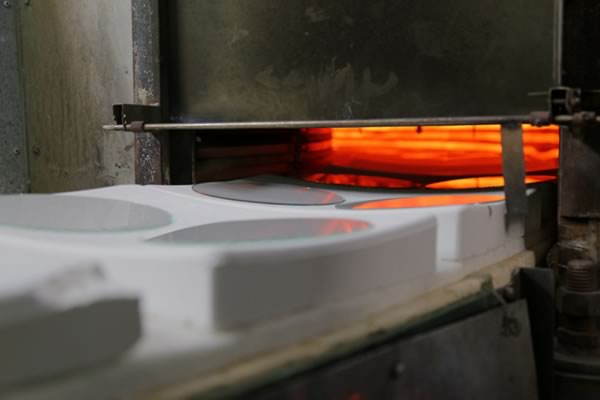
We built this dryer for those long, winding glass coating lines. The kind where you can’t just hope for the best—you have to nail the heat, right down to each zone. Because when you’re after perfect optical quality and solid adhesion, there’s no room for hot spots and cold streaks. So we made a system that locks onto a precise curing curve, using partitioned infrared heating. It just works. No more chasing the temperature down the line.
Power, Voltage, and Geometry—The Real-World Details
On a long line, the heater has to deliver steady, predictable power—zone by zone. That’s why we went with a 400V input. It gives you plenty of headroom, so even over long runs, you don’t get voltage drop. Each zone gets the same wattage, no exceptions. The 2500W rating gives you the heat density you need to drive solvents off fast. And the 300mm tube length keeps that energy focused in a tight footprint—ideal when you’re packing emitters across the conveyor. But here’s the thing: this isn’t a “set it and forget it” kind of setup. That much power in a small space means you have to design for the heat. Cooling, airflow, and thermal separation have to be thought through. If you don’t plan for the thermal load, the control loop fights to keep up, and repeatability goes out the window.
Material and Design: The Choices That Make It Feel Effortless
We use a halogen-filled quartz tube because it responds instantly. Flip the power on, and the output climbs. Flip it off, and it drops. That speed is exactly what makes zone control practical—and dependable. The tube is also coated to shape the spectrum, pushing more energy into the absorption band of the low-E stack. Less wasted heat. Less hot air just warming up the factory. And the R7s connector? A deliberate call. It handles the current and the thermal expansion without loosening, and it turns the lamp into a simple drop-in replacement. Wire it up, align the ends, lock it down. No custom cabling. No messing around in the field.
What It Feels Like on the Line
With partitioned control, you can build a true curing curve—preheat, dwell, ramp, final cure—each handled by its own zone. You can tune each section independently, matching the coating chemistry without overshooting the temperature. The payoff is consistent film hardness, stable emissivity, and a lot fewer rejects—especially on big glass that spends more time under the emitters. And on long lines, maintenance becomes less of a headache. If one zone goes down, you swap that lamp and keep everything else running. No recalibrating the whole oven. Just fast, modular uptime.