
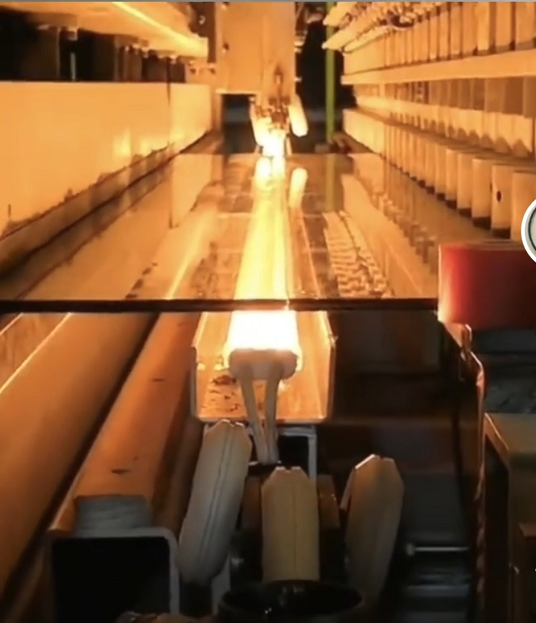
Getting the Heat Right: Why Uniformity is Actually Your Enemy in Glass R&D
If you’ve ever tried using a standard infrared lamp for glass R&D, you know the frustration. Most lamps just blast heat evenly across the board. But when you’re messing around with new glass compositions, “even” is rarely what you actually need. You need gradients. You need a bit of this here and a lot of that there to keep a handle on internal stress and phase transitions.
Shaping the Power
We don’t just tweak the length or the wattage of our lamps and call it a day. We actually get into the weeds with the power density along the quartz envelope. By playing with how the filament is wound or adjusting the voltage drop in certain spots, we can build in “hot zones” and “buffer zones.” It means you can hammer a specific part of your sample with heat while keeping the edges steady. One quick heads-up, though: if you go for extreme power density in the center, your cooling manifolds have to be beefy. Otherwise, those lamp ends will just burn out from the thermal shock.
The Real-World Trade-offs
Getting this kind of freedom means we have to ditch the off-the-shelf parts. We can tune the spectral output to match your specific glass chemistry. For example, shortwave IR digs deep into the material, while medium-wave mostly hangs out on the surface. It’s all about how the glass absorbs the energy. But there’s a catch. High-density lamps are thirsty for current. If you try to cram too much wattage into a tiny footprint, you’re going to kill the filament. We’ll work with you to find that sweet spot—the absolute ceiling where you get the heat flux you need without having to replace the lamp every two weeks.
Putting it to Work
In glass science, the magic happens during the ramp-down. Since we can control exactly where the power goes, you can mimic complex cooling curves that a standard oven just can’t touch. It’s a great way to see how a new formula handles a sudden thermal shift. You just wire it up, dial in your profiles, and you’ve got data you can actually trust.