Stop Fighting Your Glass Lehr: A Better Way to Handle Heat
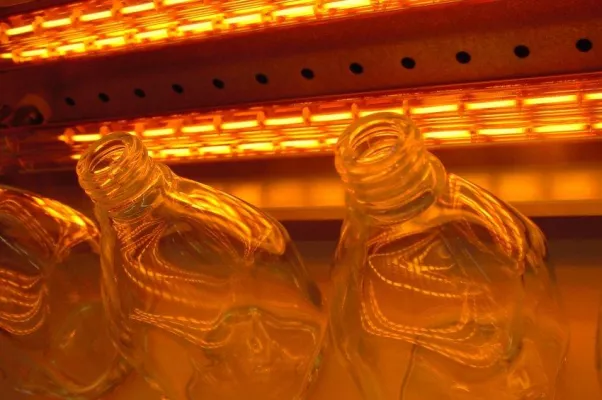
If you’ve spent any time around a glass lehr, you know the headache of internal stress. You need the temperature to be exactly right, but old-school heating elements are slow. They lag. By the time they catch up, you’ve got temperature swings that lead to cracks or those annoying optical distortions. That’s why we switched to shortwave IR lamps. They don’t mess around—they hit the glass surface the second you turn them on. Why the speed actually matters Think about how a standard convection heater works. It has to warm up the air first, and then the air warms the glass. It’s a middleman process. IR lamps skip that entirely. They use radiation to move energy directly into the material. This is a lifesaver for online annealing. If you decide to speed up your conveyor, the lamps ramp up to your target temp in seconds. No more worrying about the glass cooling down too much between zones. You just get a nice, consistent heat profile across the whole width of the line. The gear behind the heat To get that kind of punch, we use high-wattage quartz tubes. We stick with quartz because it can take the heat without warping. We specifically go with shortwave emitters since they sink into the glass much better than medium or longwave options. But here’s a heads-up: keep an eye on your power density. These arrays put out a massive amount of heat, which means they put a massive load on your electrical panels. If you’re running 2kW per lamp over a long line, make sure your wiring and breakers can handle the constant draw. Nobody likes a nuisance trip in the middle of a shift. Keeping the line moving The whole point of online annealing is to keep things flowing. The great thing about IR lamps is that they’re basically drop-in replacements. If a tube burns out, you just swap it. You don’t have to tear the whole heating chamber apart. The only real catch is the filament life. If you run these lamps at 100% all the time, you’re going to burn through them. Our trick? Use SCR controllers to modulate the power. It keeps the glass at the right temperature without murdering your tubes. It’s a simple balance that keeps your downtime low and your output steady.