

Fixing those annoying “cold spots” in glassware annealing
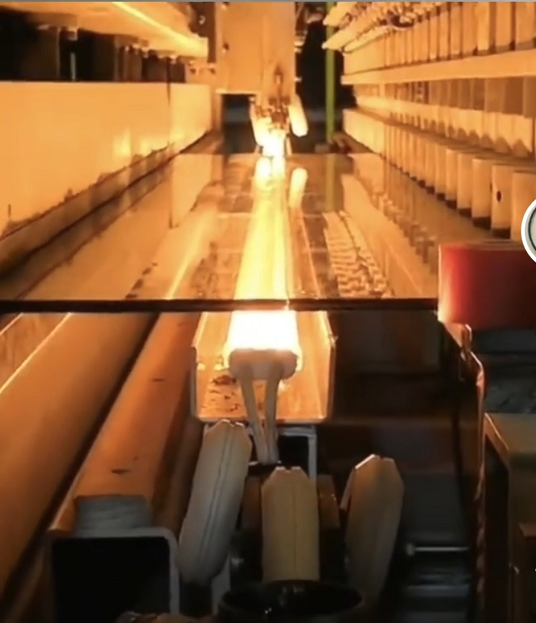
If you’ve ever worked with glass that has a weird shape—think narrow necks or deep, curved bases—you know the struggle. Even in a decent CNC cutter or kiln, the heat just doesn’t always get where it needs to go. You end up with these “dead zones” where the glass stays too cool, and that’s exactly where the stress builds up. To fix this, we use short-wave infrared (IR) preheating lamps. Instead of relying on air to move the heat around, these lamps shoot radiant energy straight into the glass. It’s the only way to make sure every single nook and cranny hits that sweet spot for stress relief. Getting the heat right Here’s the trick: you need a lot of power packed into a tiny space. We use lamps with high-density tungsten filaments. Why? Because it gives us enough punch to heat the glass without having to cram the lamp right up against the piece, which would be a disaster. Of course, it’s a balancing act. You can tweak the length and voltage to match the size of your glass, but you can’t just crank it to eleven. If you push too much wattage on a big piece, you’ll end up with “hot spots” that can ruin the glass. You have to find that perfect middle ground between the power density and how fast your conveyor is moving. The gear that makes it work We stick with high-purity quartz for the lamp envelopes. The reason is simple: quartz doesn’t soak up the heat. It lets the IR spectrum fly right through to the glass. As for where they go? Placement is everything. We set them up in a multi-angle array so the glass is hit from every side. And since things eventually burn out, we use standard connectors. It makes swapping a dead tube a five-second job rather than a whole afternoon of frustration. The trade-off The best part about IR lamps is the speed. They snap on and off almost instantly. Compare that to resistive coils, which take forever to warm up, and it’s a total win for your workflow. But there is a catch. These lamps are sensitive. If your power fluctuates or you get a voltage spike, you’ll fry the filament way faster than you should. To keep them from dying early, you really need to wire them into a stabilized power supply. It’s a small investment that saves you a lot of headaches down the road.